What to Do When an Insurance Company Calls After a California Car Accident
Lawggle
support@lawggle.com
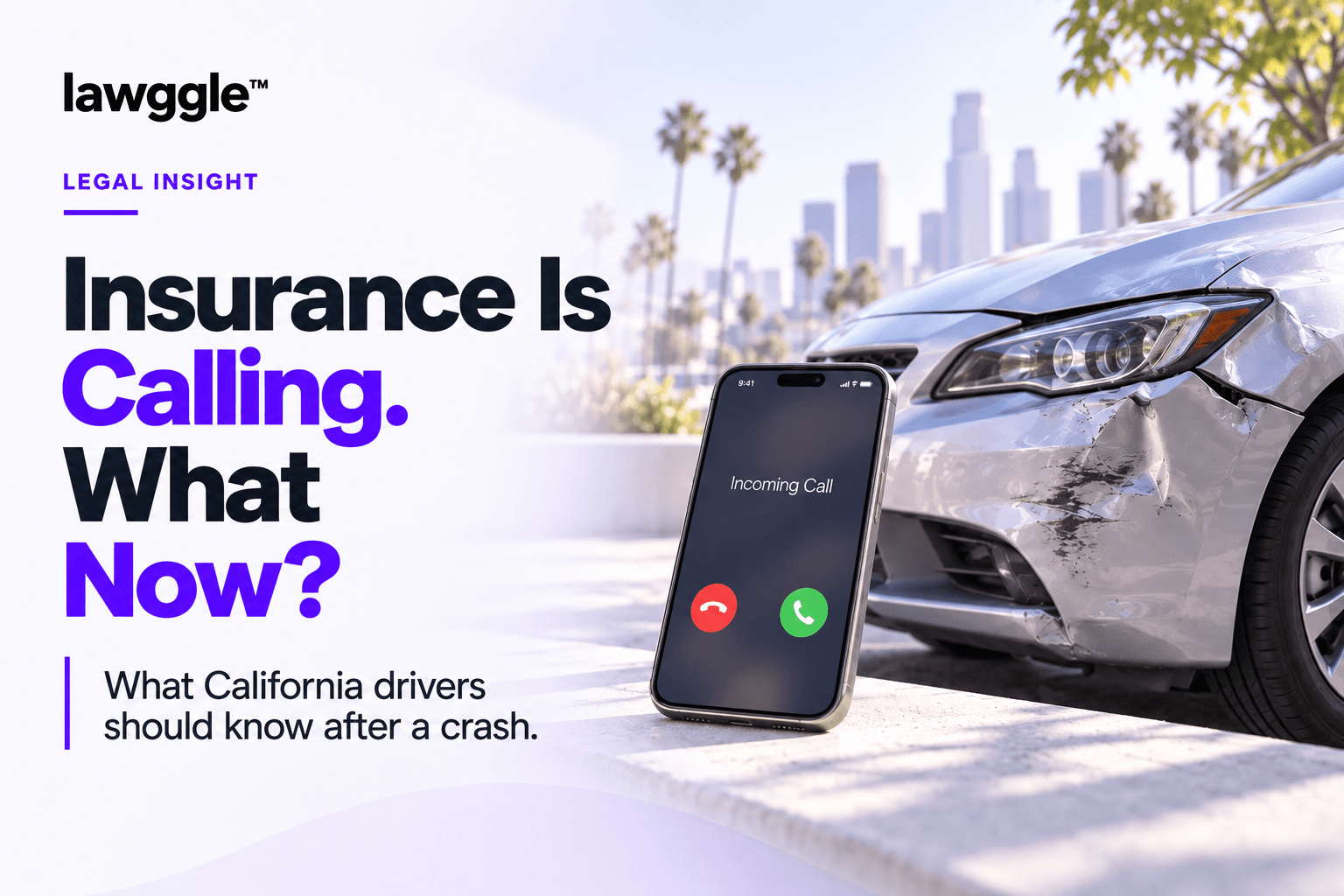
What to Do When an Insurance Company Calls After a California Car Accident
An insurance adjuster may call surprisingly quickly after a California car accident. The person on the phone may sound friendly, concerned and eager to help resolve everything.But before answering detailed questions, it is important to understand which insurance company is calling, why it wants the information and how your answers could affect a potential claim.
There is also an important difference between speaking with your own insurance company and speaking with the other driver’s insurer. Your own policy may require you to report the accident and cooperate with its investigation. The other driver’s insurance company represents the interests of its insured - not yours.
Lawggle brings real legal questions to lawyers who handle them.
Los Angeles, California personal injury attorney Nina Garayan explains what drivers should know when the other driver’s insurance company begins calling after an accident.
 Why is the insurance company calling after the accident?
An insurance adjuster’s job is to investigate the accident, evaluate responsibility and determine what the insurance company may be required to pay.
The adjuster may ask about:
- When and where the accident happened- How the collision occurred
- What each driver was doing
- Whether anyone received a traffic citation
- Whether you were injured
- Whether you received medical treatment
- Whether you missed work
- The condition of your vehicle
- Whether you have photographs, witnesses or other evidence
- Whether you are willing to provide a recorded statement
These may sound like ordinary questions. However, your answers become part of the insurance company’s evaluation of the claim.
A casual comment, an estimate or an incomplete description given shortly after the accident may later be compared with medical records, photographs, witness statements and other evidence.
First, determine whose insurance company is calling
Before discussing the accident, ask the caller to identify:- Their full name
- The insurance company they represent
- The name of the person they insure
- The applicable claim number
- A telephone number and email address
- Whether the call is being recorded
Do not assume the caller represents your insurance company simply because they know details about the accident.
Understanding who is calling determines what you may be required to do next.
If your own insurance company calls
Your insurance policy is a contract. It may require you to report an accident promptly and cooperate with your insurer’s reasonable investigation.That does not mean you should guess, speculate or provide inaccurate information. It means you should review your policy, communicate truthfully and understand what your insurer is requesting.
When speaking with your own insurer:
- Confirm that the adjuster represents your insurance company
- Keep the claim number and adjuster’s contact information
- Provide accurate basic information about the accident
- Do not guess when you do not know an answer
- Ask whether the conversation is being recorded
- Keep copies of documents and correspondence
- Review requests for medical records or authorizations carefully
- Consider obtaining legal advice if injuries or responsibility are disputed.
If you do not understand a request, ask the adjuster to provide it in writing.
If the other driver’s insurance company calls
The other driver’s insurer does not represent you. Its job is to investigate the claim and protect the interests of the insurance company and its insured.According to California personal injury attorney Nina Garayan, someone receiving repeated calls from the other driver’s insurer should pause before answering questions about fault or injuries.
The adjuster may sound genuinely concerned, but the information collected can be considered when the company decides whether to accept, deny or reduce the value of a claim.
You can take the adjuster’s contact information and say that you are not prepared to discuss the accident at that time.
You may also ask for all questions and requests to be sent in writing.
Do I have to give the other driver’s insurer a recorded statement?
A recorded statement creates a permanent account of what you say about the accident, your injuries and other surrounding circumstances.
Before agreeing, determine:
- Which insurance company is requesting it
- Whether it is your insurer or the other driver’s insurer
- Why the statement is being requested
- Whether your own policy requires cooperation
- What subjects the adjuster intends to discuss
- Whether you can receive a copy of the recording or transcript
- Whether you should obtain legal advice first
Nina’s answer specifically addresses calls from the other driver’s insurance company. She explains that injured people should understand their rights before answering questions about fault or injuries.
The situation may be different when your own insurer requests cooperation under the terms of your policy.When in doubt, review the request and your insurance policy before agreeing.
What should I avoid saying to an insurance adjuster?
Always be truthful. However, being truthful does not require you to speculate or provide answers before you have enough information.Avoid statements such as:
- “I’m completely fine.”
- “I probably caused it.”
- “I didn’t see the other car.”
- “My injuries aren’t serious.”
- “I don’t need medical treatment.”
- “Everything is back to normal.”
- “I may have been distracted.”
- “I’ll accept whatever you think is fair.”
Immediately after an accident, you may not know the complete cause of the collision or the full extent of your injuries.
If you do not know or remember something, say that you do not know or do not remember. Do not fill gaps by guessing.Should I discuss my injuries?
Describe your condition accurately, but be cautious about making definite statements before your injuries have been properly assessed.
Some symptoms may not be immediately apparent. Pain, stiffness, headaches, dizziness and limited movement can develop or become more noticeable after the initial shock of the collision.
Do not exaggerate your symptoms, but do not minimize them either. Seek appropriate medical attention and ensure your providers have an accurate description of how the accident occurred and what you are experiencing.
Your medical providers - not an insurance adjuster -should evaluate your injuries and recommend treatment.Should I sign a medical authorization?
An insurance company may ask you to sign an authorization allowing it to obtain medical records.Read the authorization carefully before signing it.
Determine:- Which records can be obtained
- Which healthcare providers are covered
- How far back the authorization reaches
- Whether it includes unrelated medical history
- How long the authorization remains effective
- Who may receive or share the information
A broad authorization may give access to records that are unrelated to the accident.
If you do not understand the scope of a medical authorization, consider obtaining legal advice before signing it.What if the adjuster offers me a quick settlement?
An early settlement can sound appealing, especially when medical bills, vehicle repairs and missed work are creating financial pressure.Before accepting an offer, understand:
- Which losses the payment covers
- Whether medical expenses are included
- Whether lost income is included
- Whether future treatment is contemplated
- Whether accepting requires signing a release
- Whether the claim will be permanently closed
- Whether additional compensation could be requested later
A release may prevent you from pursuing further compensation, even if additional injuries or expenses are discovered afterward.
Do not assume an early offer accounts for the complete effect of the accident.What rights do California insurance consumers have?
California has standards governing how insurers handle claims.
According to the California Department of Insurance, insurers generally must acknowledge a claim, begin investigating and provide necessary forms and reasonable assistance no later than 15 days after receiving notice of the claim.
The Department also states that insurers generally must respond to claimant communications within 15 days and accept or deny a claim no later than 40 days after receiving proof of claim, subject to applicable circumstances and exceptions.
These timelines describe obligations imposed on insurers. They do not determine the value of a claim or mean that every claim must be accepted.
Keep written records of your communications with the insurance company, including:- The date and time of every call
- The adjuster’s name and contact information
- The claim number
- What information was requested
- Documents you submitted
- Promises or deadlines given by the adjuster
- Copies of emails, letters and forms
If an insurer is not communicating or handling a claim appropriately, California consumers can contact the California Department of Insurance for information or submit a complaint.What if I already spoke to the adjuster?
Speaking with an insurance adjuster does not automatically destroy your claim.Write down what you remember about the conversation, including:
- Who called
- When the call occurred
- Whether it was recorded
- Which questions were asked
- What answers you provided
- Whether you discussed fault or injuries
- Whether any documents or settlement offers were mentioned
Preserve related emails, text messages, voicemail messages and claim documents.
If you are concerned about something you said, a California personal injury lawyer can review the circumstances and explain how it may affect the claim.When should I consider speaking with a California car accident lawyer?
Not every insurance conversation requires a lawyer. Consider seeking legal advice when:- You or a passenger was injured
- The other driver disputes responsibility
- The accident involved several vehicles
- The insurer wants a recorded statement
- You are asked to sign a medical authorization
- The insurer requests extensive medical history
- You receive an early settlement offer
- The company denies the claim
- The adjuster stops responding
- You are blamed for all or part of the accident
- The collision caused substantial medical expenses or lost income
- You are unsure whether your own policy requires you to provide information
A lawyer can review the accident, available insurance coverage, communications with the adjuster and any settlement documents.Nina Garayan is a personal injury attorney in Los Angeles, California. In her Lawggle video, she explains what someone should know when the other driver’s insurance company begins calling after a California car accident.
WATCH MORE ANSWERS
VIEW NINA GARAYAN'S PROFILE
FIND A LAWYER
Frequently asked questions
Should I ignore calls from the insurance company?
Do not simply ignore communications from your own insurer because your policy may include reporting and cooperation requirements. If the other driver’s insurer calls, collect the caller’s information and consider whether you want legal advice before discussing fault, injuries or settlement.Can an insurance adjuster record me without telling me?
Recording laws and their application can depend on where the participants are located and the circumstances of the call. Ask directly whether the call is being recorded. If you are uncertain, do not continue with a detailed statement until you understand the situation.Can I ask the insurance company to communicate in writing?
You can ask the adjuster to send questions, document requests and settlement offers in writing. Written communication also helps you maintain an accurate record of the claim.Should I tell the adjuster that I feel fine?
Describe your condition truthfully, but avoid making a definitive statement before you understand whether you were injured. Some symptoms may develop or become more noticeable after the accident.What happens if I refuse the first settlement offer?
You do not have to accept an offer merely because it has been made. Before accepting or rejecting it, review what the offer covers, whether a release is required and whether all current and reasonably anticipated losses have been considered.Can I contact the California Department of Insurance about a claim problem?
The California Department of Insurance provides consumer information and accepts complaints concerning insurance companies and claim handling. A regulatory complaint is different from pursuing a personal injury claim.Explore more California car accident answers
Understanding one insurance call is only part of navigating an accident claim. Explore more Lawggle answers about evidence, medical care, responsibility and insurance communications.
 VIEW MORE PERSONAL INJURY ANSWERS
Have a legal question after a car accident?
Every accident is different. On Lawggle, you can watch real lawyers answer common legal questions, explore lawyers who handle personal injury matters or ask a general legal question.ASK A LEGAL QUESTION
FIND A PERSONAL INJURY LAWYER
Lawggle helps people understand their legal options through clear information from real lawyers.